
Posted on

How to Set Up a Basic Homebrew Laboratory

home brew equipment
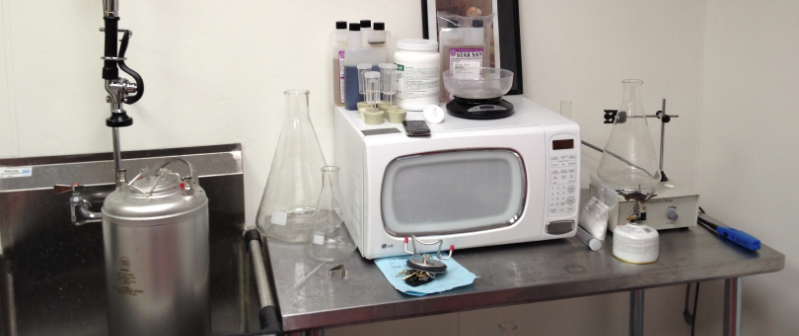
If you are interested in beer beyond just having a couple drinks from time to time, you might decide to take up a homebrew project. After all, what better what to get to know the ins and outs of beer than to brew it yourself? Not only will this provide you with a thorough beer education, but it will also leave you with something unique to drink when all is said and done.

There is certainly a lot of educational ground to cover if you’d like to get started brewing your own beer – more than we can fit in this article – but we’d like to quickly touch on the basics of setting up your home brewing lab equipment.

Getting Started Simply

It’s tempting when getting into the world of homebrew to throw a bunch of money at the project, buying all of the latest and greatest gear on the market. Don’t fall into that trap. For one thing, you don’t know if you are going to like this hobby, even if you are excited about it at the moment. Also, you don’t yet know if you’ll have time for it, or if you will enjoy the results of your work. With that in mind, do your best to keep it simple – and cheap – at the start. There will always be more expensive gear to buy later if you really get into it, but don’t rush to that stage just yet.

The Right Thermometer

Measuring temperatures accurately is one of the most important capabilities in your lab. You’ll find that you need to measure temperatures regularly, so you don’t want to be doubting the accuracy of your thermometer. Fortunately, you can purchase a quality lab thermometer for a relatively modest price.

The Right Scale

Just as is the case with temperature, you also need to be able to measure weights accurately as you prepare your materials. You’ll want a quality scale that is capable of measuring in grams. For supreme accuracy you’ll probably want to opt for a digital scale, although that option will be a little more expensive. To save money, look for a good counterbalance scale.

A Variety of Other Supplies

It seems that the list of various tools and pieces of equipment you need to homebrew properly just keeps going and going. The exact list of what you need to acquire will depend on the specific process you are going to use and the level of accuracy you wish to achieve. Fortunately, most of the items that you can use in this process are relatively affordable. Some potential shopping targets include a triple-scale hydrometer, 50-mL plastic tubes, test tube rack, coors plate, spray bottle, and more.

Taking on the challenge of a homebrew project is no small feat, but it can be tremendously rewarding when the final product works out just right. Take your time developing a proper lab space so your efforts are not wasted as a result of an insufficient workspace and the wrong equipment. Good luck!


Posted on

Top 5 Mistakes Life Science Startups Make on the Path to Clinical Trials

life sciences

Starting a business in the life sciences industry comes along with the potential for massive rewards. Of course, those rewards are promised to no one, and far more companies fail than succeed. So, what is it that separates the success stories from the rest? Avoiding the five mistakes listed below is a great place to start.

#1 – Believe Results – Not Your Preconceived Notions

It’s easy to think that your plan from the start is going to work all the way through clinical trials and onto the market. Unfortunately, that is not likely to be the case. You are going to need to trust the data that you obtain during your early studies and use it to chart a path forward. Ignoring what the data is trying to tell you is a sure way to head down the wrong road.

#2 – Letting Your Ego Get in the Way

There is plenty of confidence required to take on a task on the scale of starting a life science company. While it is a good thing to believe in yourself and trust in your abilities, it is also important to reach out for expert assistance when necessary. It’s unlikely that you know everything there is to know about all parts of your new business. The most successful business owners tend to be those who are adept at sticking to what they do best and turning over the rest to others.

#3 – Planning for the Roadblocks

If you think you are going to have a clear path and easy road from the start of your company on through clinical trials, you are in for a rude awakening. Sure, that’s always possible, but it sure isn’t likely. There are almost certainly going to be hurdles that pop up along the way, which is why you need to plan for how you are going to respond when issues pop up. Positioning yourself to adapt quickly when things don’t go your way will largely determine whether your venture is able to survive.

#4 – Managing the Business Side

There are certain things that all businesses need to do in order to remain viable and stay in operation long enough to make a difference. If a life science startup turns a blind eye to the business side of the equation, it’s going to be hard – or downright impossible – to make things work. Working with a business accelerator or incubator can be a great help to scientists who are more experienced in the lab than they are in the boardroom.

#5 – Hear Everything

You don’t necessarily have to accept every piece of advice you are given, but you certainly should listen. Take in as much information as you can from as many different sources as you work on making decisions and charting a path forward. Remember, those who can provide important input are not necessarily the highest-ranking individuals in your organization, or even the most experienced. Keep an open mind and an open office door so you can absorb all of the ideas available to you.