

Posted on

How to Buy Used Lab Equipment Without Regret

A decorative image of a large lab space with used lab equipment

When budget constraints are tight and lead times on new instruments stretch into months, the case for pre-owned equipment is hard to argue with. The cost savings can be significant, availability is typically faster, and the pre-owned market is often the only place to find legacy instruments that have been discontinued but remain essential to a specific workflow. For many lab managers and procurement teams, the decision to buy used lab equipment is a smart allocation of limited resources.

The hesitation is understandable, though. Unlike purchasing new, you don’t always know the full story behind a piece of equipment. But the risk is manageable, provided you know what to look for.

This is the buyer-side companion to our recent guide on how to consign, trade, or sell lab equipment. Where that piece covered how to properly sell used lab equipment online, this one gives buyers a clear checklist for evaluating pre-owned instruments with confidence, as well as what questions to ask before committing to a purchase.

Understand Condition Grading Before You Shop

“Used” is a blanket statement that doesn’t tell the full story. It’s just a starting point. Vendors use terms like refurbished, certified pre-owned, and as-is to describe different things, and the gap between them can mean the difference between an instrument that’s ready to run on day one and one that requires immediate servicing before it’s functional.

Here are the common grades you’ll encounter when you set out to buy used lab equipment:

  • Refurbished: Inspected, repaired to manufacturer specifications, and tested for full functionality. Often includes new or reconditioned components.
  • Certified Pre-Owned: Similar to refurbished, but typically implies a documented inspection process and may include a warranty. Ask what the certification covers.
  • As-Is: Sold in its current condition with no testing, repair, or guarantee of functionality. Risk is entirely on the buyer.
  • Cosmetic Grade: Functionally tested but may show signs of wear. Common in equipment where physical condition doesn’t affect performance.

“Always ask the vendor to define their grading standards in writing before assuming you know what you’re getting.”

Verify the Service and Maintenance History

A documented preventive maintenance history is one of the clearest indicators of a well-cared-for instrument. When you buy used lab equipment with full service records, you know what’s been done, when it was done, and what components have been replaced.

When evaluating a piece of equipment, request:

  • Service logs and PM records
  • Repair history, including any major component replacements
  • Documentation of any known issues and how they were resolved
  • The decommissioning reason, if the instrument came from a lab closure

High-cycle instruments like centrifuges, PCR thermocyclers, and shakers accumulate wear in ways that lower-use items don’t. A centrifuge with 50,000 cycles and no PM documentation is a different purchase than one with the same cycle count and a complete service history.

Confirm Calibration Status and Documentation

Calibration documentation is non-negotiable. It affects data integrity, and out-of-spec instruments produce out-of-spec results.

Before you finalize any decision to buy used lab equipment, ask the following:

  • When was the instrument last calibrated, and by whom?
  • Is the calibration certificate transferable, or was it issued to the original lab?
  • Does the unit come with supporting calibration documentation?
  • Will the instrument require re-calibration upon installation at your facility?

A Note on Re-Calibration

Even a fully calibrated instrument may require re-calibration after transport and reinstallation. Factor this into your budget and timeline, especially for analytical instruments where baseline accuracy is critical.

Test Before You Commit (or Confirm the Return Policy)

When possible, strive for the ideal scenario: The instrument is powered on, demonstrated, and put through its paces before the transaction closes. If you’re purchasing locally or the vendor can arrange a demonstration, insist on it. There’s no substitute for watching an instrument run.

When in-person testing isn’t possible, the purchase terms need to compensate for that gap. Look for:

  • A functional testing certification from the vendor’s in-house technicians
  • A clearly defined return window 
  • Warranty terms that specify what’s covered and for how long
  • Confirmation that the unit powers on and passes operational testing

“Vague language around condition and no defined return policy are red flags.”

If a vendor can’t tell you with confidence whether a unit powers on and functions as intended, that uncertainty will become your problem after the sale.

Watch for These Red Flags

Knowing where to buy used lab equipment online means knowing how to spot listings that carry more risk than they’re worth. The following are consistent warning signs across vendors, auction platforms, and resellers:

  • “Sold as-is, no returns” with no supporting documentation. This combination removes all accountability from the seller and transfers all risk to the buyer.
  • Missing accessories, probes, rotors, or software. An instrument that’s non-functional out of the box because key components are absent can be more expensive to complete than buying new.
  • No information on equipment origin. A unit sourced from an auction lot and one decommissioned from a known research lab carry different risk profiles.
  • Pricing that seems too good to be true. This usually means something has been left out of the description on purpose.

Buy From a Vendor Who Services What They Sell

There’s a difference between a dealer who inspects, tests, and services equipment in-house and one who simply resells auction lots. The first category has technical accountability built into their process; the second is passing on someone else’s unknown quantity.

When evaluating where to buy used lab equipment, look for vendors who offer:

  • In-house technical staff who perform the inspections and repairs themselves
  • Documented service processes and post-sale support
  • Warranty options that reflect confidence in the equipment they’re selling
  • Preventive maintenance plans that extend the equipment’s working life after purchase

BaneBio inspects, refurbishes, and services every instrument before it leaves our facility. Every piece of pre-owned equipment comes with a standard 14-day warranty, and our Preventive Maintenance Service Plans are designed to keep your equipment running reliably long after the purchase is made.

Browse our current pre-owned lab equipment inventory or reach out to the BaneBio team to discuss what you’re looking for. We’re here to help you find equipment that works now and well into the future.

As a used lab equipment vendor that cares about the quality of everything we sell, we’re happy to ensure your purchase is one you won’t regret. Reach out with any questions today!

Posted on

Auto Defrost vs. Manual Defrost Freezers: Which Is Right for Your Lab?

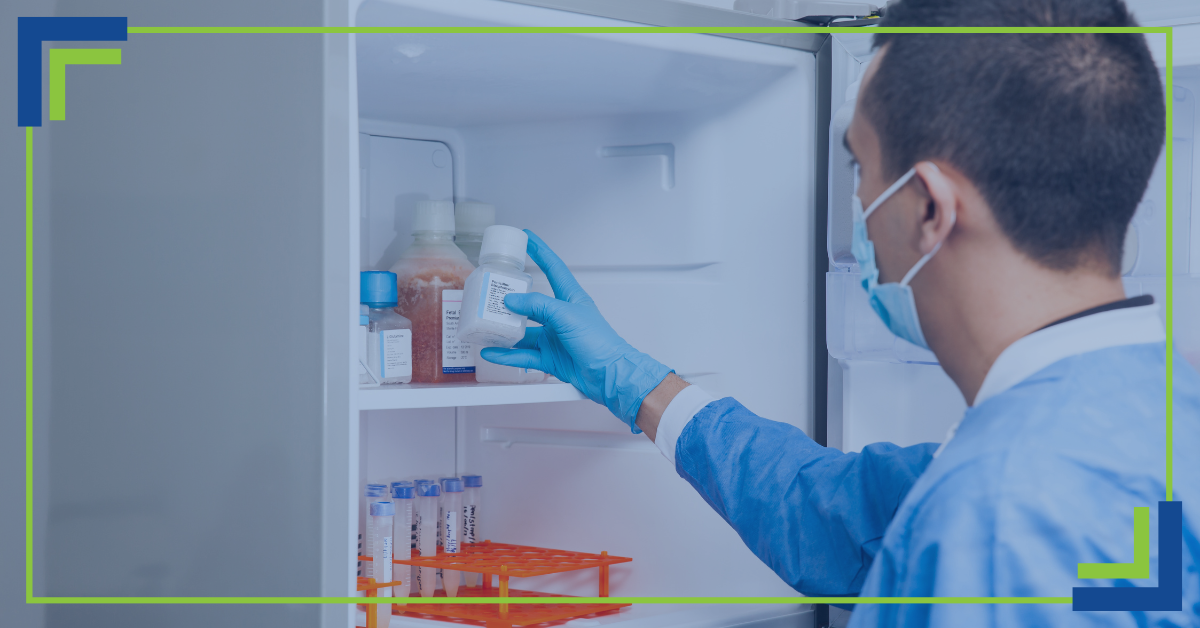
A scientist removing an item from a lab freezer

You open your lab freezer after a scheduled defrost cycle and notice the temperature log shows a two-hour excursion above your acceptable threshold. Downstream, that means a rack of irreplaceable biological samples that may now be compromised, and a lot of difficult conversations ahead.

Defrost type is rarely the first thing labs think about when sourcing a lab freezer, but it should be. Whether you’re storing enzymes, vaccines, cell lines, or reagents, the way your unit manages frost accumulation has direct consequences for sample integrity, workflow, and maintenance burden.

The good news: Both auto and manual defrost systems are used successfully in professional lab settings every day. Neither is universally superior. The right answer depends entirely on what’s inside the unit, how your lab operates, and what level of maintenance your team can support.

How do these systems work? What is a manual defrost freezer? What is an auto defrost freezer? The answers are all below.

How Each System Works

Before you can make the right call, it helps to understand what’s happening inside each type of unit.

Manual Defrost

  • Refrigerant circulates through coils embedded in the cabinet walls.
  • There are no fans or forced air movement.
  • Frost accumulates on wall coils over time.
  • The unit must be taken offline periodically for manual defrost.

Auto Defrost (Forced Air)

  • Evaporator coils sit in an enclosed ceiling housing.
  • Fans circulate cold air throughout the cabinet.
  • A heating element briefly warms the coils on a timed cycle.
  • No manual intervention is required.

Here’s a side-by-side comparison of the core differences:

Feature Manual Defrost Auto Defrost
Air circulation Passive (none) Forced air (fans)
Frost management Periodic manual removal Automated heating cycles
Temperature uniformity Stratified; warmer near top More uniform throughout
Sample desiccation risk Low Higher with open containers
Maintenance labor Required every 3–6 months Minimal ongoing labor
Common  Deep freeze (−20°C and below), sensitive biologics Fridge range (4°C), high-throughput labs

What Is a Manual Defrost Freezer?

A manual defrost freezer, sometimes called a “cold wall” freezer, relies entirely on refrigerant-cooled cabinet walls to maintain temperature. There are no fans or active air movement. Frost builds up on the interior walls over time and must be cleared by taking the unit offline, removing samples to temporary storage, and allowing the ice to thaw. It’s more labor-intensive, but that passivity is part of what makes it well-suited for sensitive storage applications.

What Is an Auto Defrost Freezer?

An auto defrost freezer (also called a “no-frost” or “forced-air” freezer) uses a fan-driven evaporator system combined with a periodic heating cycle to prevent frost from accumulating. The defrost cycles happen automatically, typically on a timer, and don’t require any action from lab staff. This convenience comes with trade-offs that matter more in some storage contexts than others.

The Temperature Stability Question

Temperature stability is the first concern most lab managers raise. The conventional wisdom has been that auto defrost causes dangerous temperature swings. Like most generalizations, this one is partly right and partly outdated.

“Neither defrost system is automatically safer. The quality of the unit and the sensitivity of the samples both matter far more than the defrost type alone.”

Here’s what the data shows: on a quality lab-grade auto defrost unit, sample temperature rise during a defrost cycle is typically minimal, often in the range of 1 to 2°C. That’s a far cry from the dramatic excursions people fear. The reputation largely comes from consumer-grade equipment and older auto defrost units that lacked the insulation, control systems, and cycle management that modern lab-grade units offer.

That said, manual defrost units aren’t immune to temperature events either. Routine door openings introduce warm ambient air, and without forced air circulation to aid recovery, a lab freezer with passive cooling can take significantly longer to return to set-point temperature.

  • Auto defrost concern: Heating cycles introduce periodic temperature fluctuations. In older or consumer-grade units, these can be significant. In modern lab-grade auto defrost equipment, they are typically minimal.
  • Manual defrost concern: Passive cooling means slow recovery after door openings. Warm air enters and the unit lacks the airflow to push it back out quickly.
  • The real question: Which type of temperature event is more likely to affect your specific samples, and which unit’s design will best mitigate it?

Industry data on recovery time comparisons between defrost types consistently reinforces the same takeaway: unit quality and alarm-response systems matter more than defrost type. If your lab doesn’t have a temperature monitoring system and alarm protocol in place that’s a more urgent concern, regardless of which lab refrigerator freezer you’re running.

Choosing by What You Store

Defrost type should be determined by what you’re storing and how you need to store it:

  • Highly sensitive biologics, enzymes, and irreplaceable samples: Manual defrost is the traditional choice and still strongly preferred. Temperature stability is paramount, and the periodic disruption of defrosting is manageable with proper planning. A manual defrost freezer like the VWR MFV-30 is a workhorse in this category for good reason.
  • Vaccines and general reagents at fridge temperature: Either system can work well if the unit is lab-grade. Prioritize alarm systems and temperature logging over defrost type here.
  • Open-container storage or loosely covered samples: Manual defrost is strongly preferred. Air circulation from forced-air systems can desiccate samples stored in open or loosely covered containers over time, a risk that doesn’t exist in a passive cooling environment.
  • High-throughput labs with frequent door openings: Auto defrost may perform better in this situation. Forced air circulation helps the cabinet recover temperature faster after each door-open event, which means cumulative temperature exposure is often lower than it would be with a slow-recovering passive unit.
  • Lab refrigerators at 4°C: Auto defrost is widely accepted at refrigerator temperatures, and units like the Thermo Scientific TSX2305SA are common in this role. The physics of frost formation at 4°C are less aggressive, and the convenience advantage of auto defrost is harder to argue against.
  • Lab freezers at −20°C and below for critical samples: Manual defrost has stronger historical support at deep freeze temperatures. Modern lab-grade auto defrost freezer units narrow that gap considerably, but for truly irreplaceable samples, manual defrost remains the conservative choice.

Maintenance Considerations

Manual Defrost

Expect to take the unit offline for defrosting every 3 to 6 months, depending on usage frequency, ambient humidity, and how often the door is opened. Each defrost event means temporarily relocating samples to backup storage, which itself carries temperature risk if not planned carefully. Labs running manual defrost units should document a defrost schedule, designate backup storage capacity, and ideally have dry ice or a spare unit on standby.

Auto Defrost

No manual intervention is needed. The trade-off is trusting the defrost cycle mechanism to function correctly over time. If the heating element or cycling timer fails, frost can accumulate undetected until it begins affecting temperature performance. Routine preventative maintenance checks from a qualified service technician help catch these issues before they become sample-loss events.

Pro Tip: How Often to Manual Defrost a Freezer

Most manufacturers recommend defrosting when frost buildup reaches approximately a quarter of an inch on the interior walls. At a minimum, it should occur every 3 to 6 months as a scheduled maintenance event. High-humidity environments and units with heavy door traffic will need more frequent attention. Never let frost accumulate past half an inch, as it begins to impair heat transfer efficiency and temperature uniformity.

Quick Reference: Which Should You Choose?

If you want to get straight to the answer for your best situation, here it is:

Storage Scenario Recommended Defrost Type
Sensitive biologics or enzymes Manual defrost
Open containers or loosely covered samples Manual defrost
Vaccines and general reagents (fridge temp) Either, if lab-grade
High-throughput lab, frequent door openings Auto defrost
Lab refrigerator (4°C) Auto defrost generally accepted
Lab freezer (−20°C or lower), critical samples Manual defrost preferred

The Bottom Line

Between the two options, the right choice is always the one that matches your samples, workflow, and capacity for maintenance.

What matters most is buying a lab-grade unit from a reputable manufacturer, pairing it with a temperature monitoring and alarm system, and having a documented protocol for both routine maintenance and emergency response. A well-managed manual defrost unit outperforms a poorly maintained auto defrost unit.

The safest choice is the one you can operate correctly.

Need a Manual or Auto Defrost Lab Freezer?

BaneBio carries quality-tested lab-grade refrigeration, backed by our standard 30-day warranty. Browse the refrigeration catalog or reach out to discuss your specific storage needs. We’re always happy to help you make your lab as effective and efficient as possible.